
Fès el-Bali is not a museum. It is a living city of some 9,000 lanes where people work, pray, study and bring their bread to the communal oven – much as they have for more than a thousand years. That is what makes it extraordinary, and also what makes a first visit feel overwhelming. A little preparation goes a long way.
Start at the Blue Gate
Most visitors enter through Bab Boujloud, the tiled gate on the medina’s western edge. From here, two main streets – the Talaa Kebira and the Talaa Seghira – run downhill towards the Al-Qarawiyyin mosque at the heart of the old city. Remember this simple rule: downhill leads to the centre, uphill leads to a gate.
Go with a guide – at least once
For your first morning, a local guide is worth every dirham. They know which madrasas are open and will steer you past the young men offering to “show you the tannery”. A polite la, shukran (no, thank you) and a confident step forward is all you need with unofficial guides.
Downhill leads to the centre, uphill leads to a gate. If you ever feel lost, walk uphill.
Go to the tanneries early
The Chouara tannery is at its most beautiful in the morning, when the sun lights the dye pits and the workers are busiest. You’ll view it from the terraces of the surrounding leather shops; someone will hand you a sprig of mint for the smell. A small tip or purchase is customary, but never obligatory.
Know the etiquette
- Mosques, including Al-Qarawiyyin, are open to Muslims only – but you can admire the courtyards from the doorways. The Bou Inania and Al-Attarine madrasas are open to everyone.
- Dress with shoulders and knees covered, and wear shoes with grip: the lanes are steep and can be slippery.
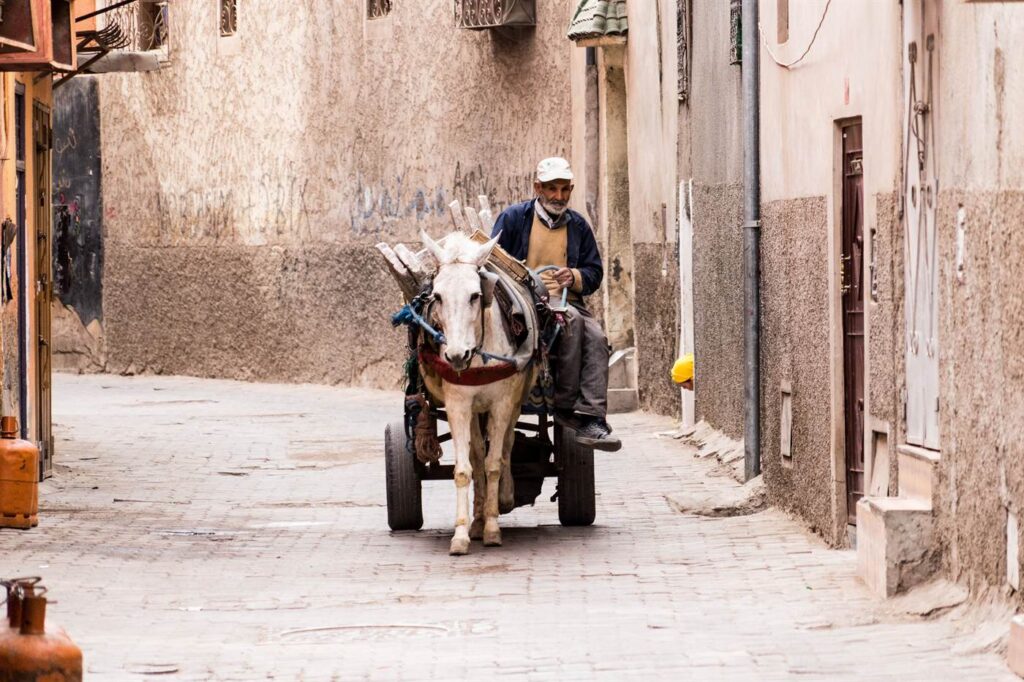
- Balak! means “watch out” – step aside for mules and handcarts.
- Ask before photographing people, especially artisans at work.
Plan around Friday
Friday is the holy day. Many shops close around the midday prayer and some stay closed all afternoon. It is a lovely, quieter day to walk – but not the best for shopping.
Bring cash
Most small shops and cafés accept only Moroccan dirhams. There are cash machines near Bab Boujloud and in the Ville Nouvelle. Bargaining is normal in the souks: start with a smile, and only name a price you’re genuinely happy to pay.
Explore it with us
Every one of our tours through Fès includes a full guided day in the medina.